
Build a game board for your table

Make your own chessboard.

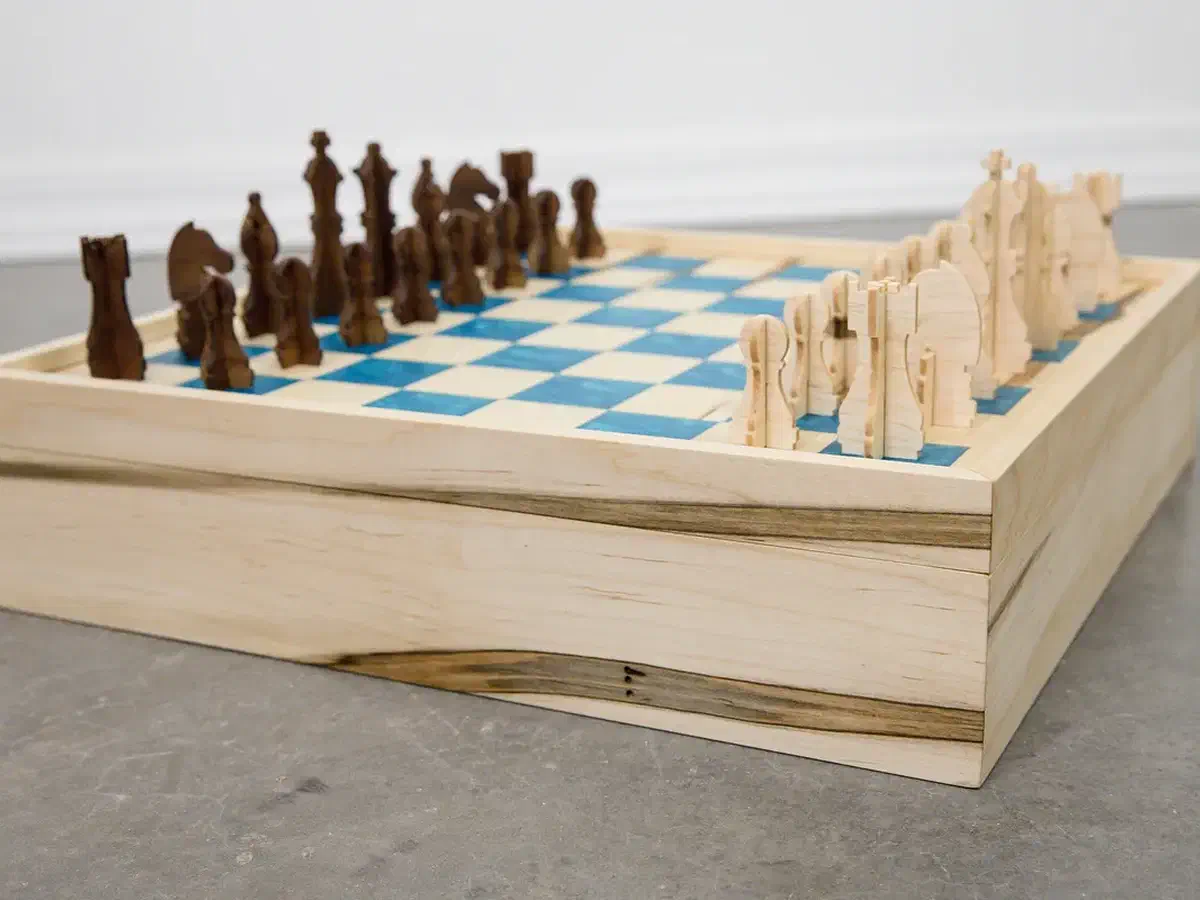
See a wooden set, an epoxy-inlay board, and a concrete set cast from CNC-cut mold masters. Open each preview to check what its file includes before planning your cut.

See the real projects

Choose the board before the pieces

Choose a look before you cut

Chess is the same game on each of these boards. Their character comes from the materials and finish: a wooden set, a live-edge slab with epoxy squares, or a sculptural concrete set. If you want to make one, begin with the look you like and work back to the stock, tooling, and finishing steps.

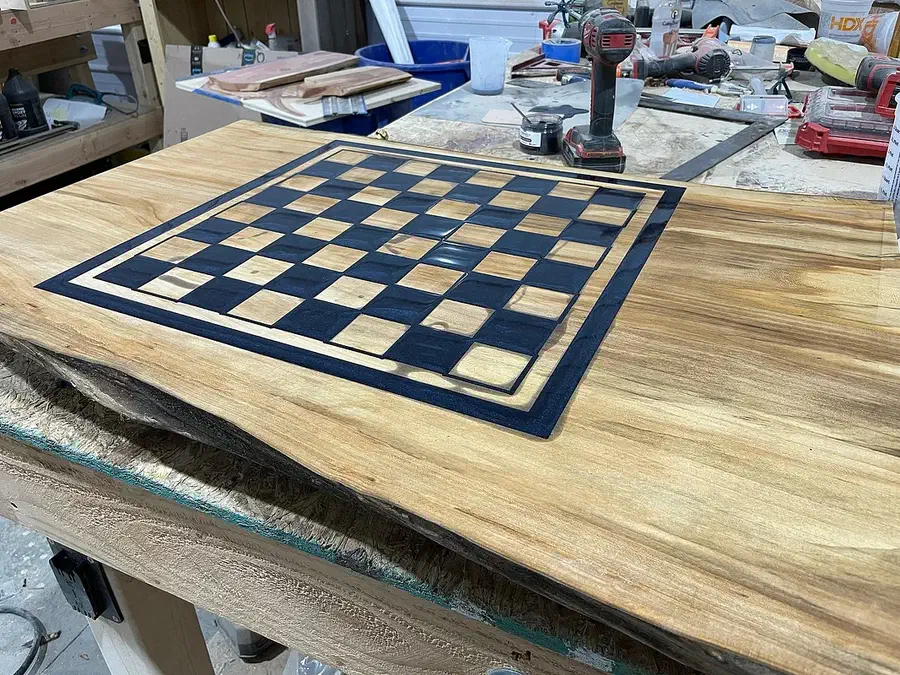
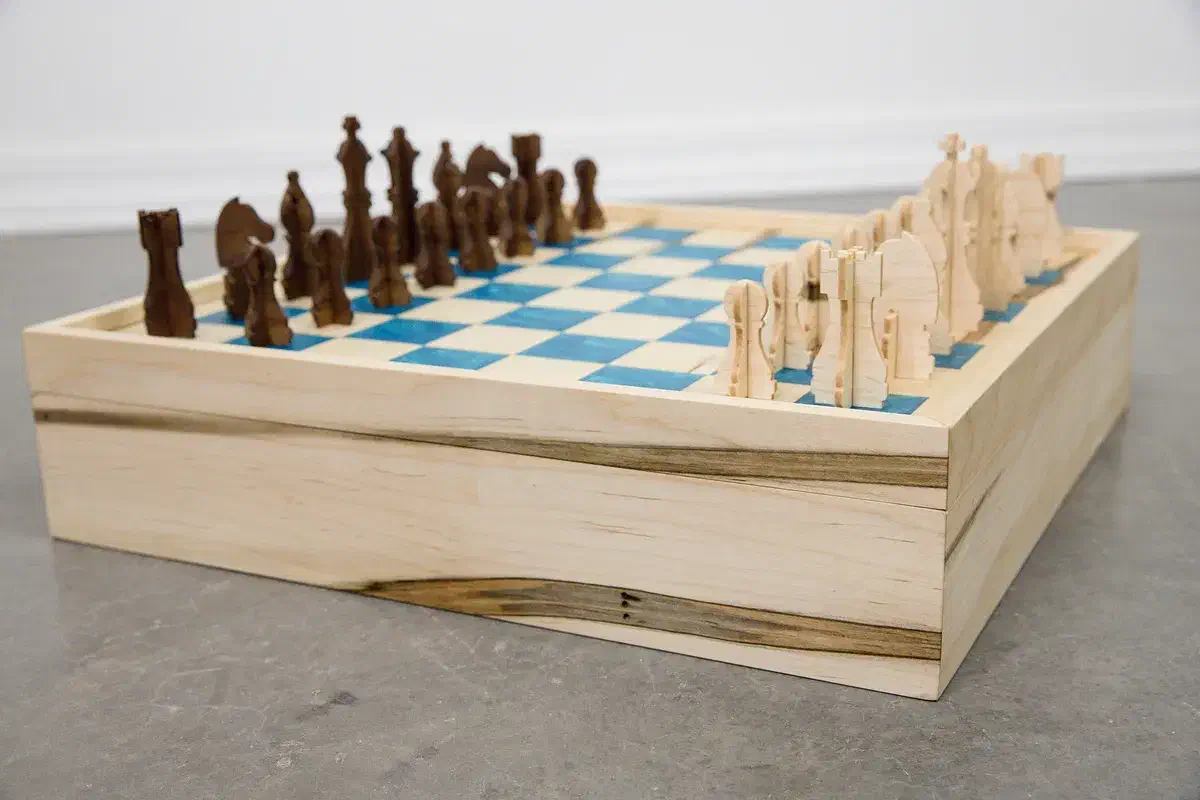
Each Easel file is a starting point for a different part of the project. Katie Cleveland’s file lays out the wooden game pieces, while the gallery shows her finished board and storage box. Michael Powell’s live-edge example uses an 18 × 18 × 1 in Soft Maple inlay board; the surrounding tabletop is a separate build. Wenray Wang’s preview contains imported machining passes. His gallery instructions describe Rhino modeling, Fusion 360 toolpaths with separate piece and board files, timber masters, silicone molds, and casting. Open each preview to check its workpiece and tooling before planning your cut.

Real projects from the Easel gallery

Three ways to make a chessboard

Compare a wooden game set, a live-edge board with epoxy inlay, and a concrete set cast from carved timber masters. Katie's Easel file contains game-piece shapes, not the board or storage box. Michael's file supplies a board layout. Wenray's preview contains imported machining passes; his instructions explain the separate Rhino and Fusion 360 design workflow, silicone molds, and concrete casting. Creating an Easel account is free, with no credit card required.

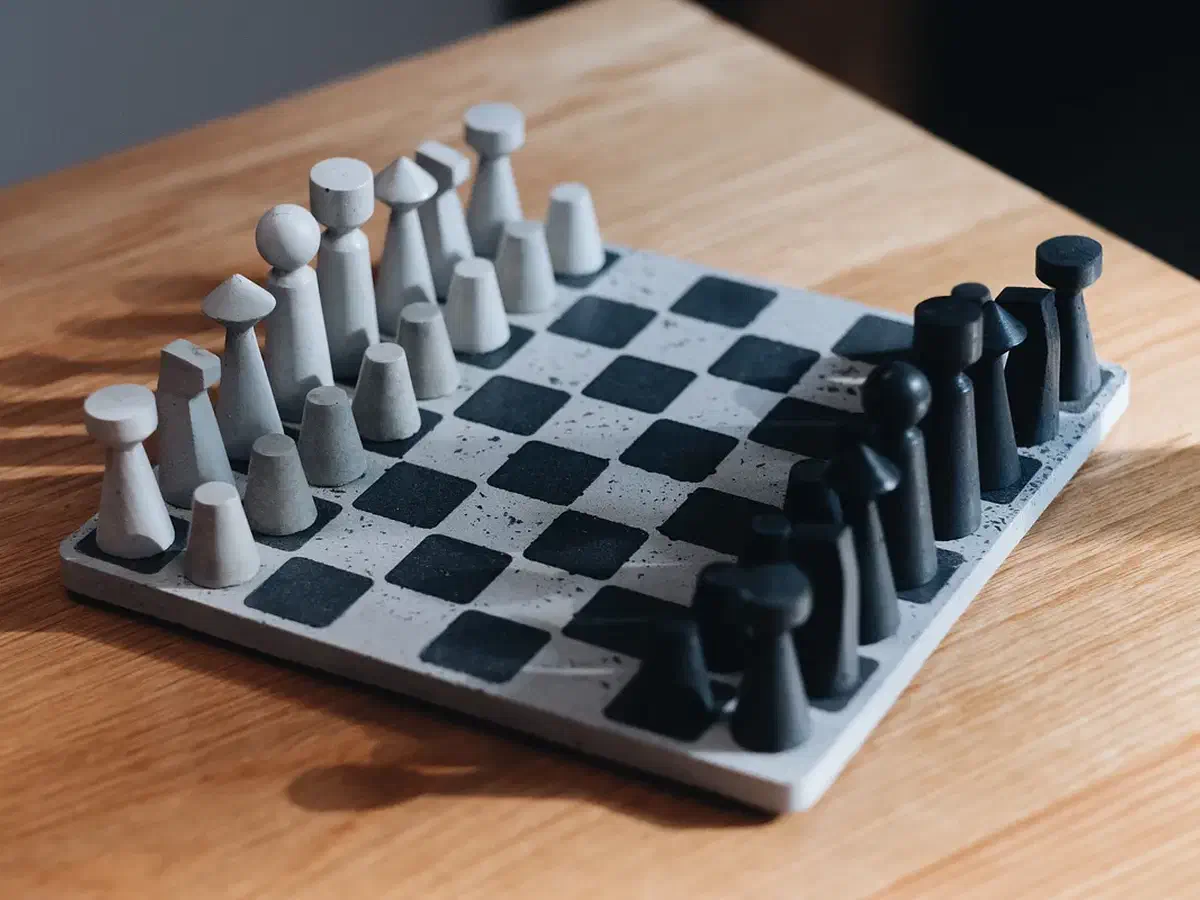
Finished chess set with pale and dark concrete pieces on a matching square board, resting on a wooden tabletop Concrete Chess Setby Wenray Wang

Concrete Chess Set

For a cast set, Wenray Wang's gallery shows the finished concrete board and pieces. The Easel preview contains imported machining passes, not editable 3D piece designs. His instructions model the set in Rhino and prepare toolpaths in Fusion 360, with separate files for the pieces and board; follow those instructions for timber masters, silicone molds, and concrete casting.

Browse more board-game projects →

From the makers’ comments and project notes

Keep grain and tool marks out of cast pieces

Read the project comments without an account. Log in to post a question in the project discussion; replies are not guaranteed.

Smooth the timber masters before making silicone molds

Wenray Wang sands his timber pieces to 240 grit, applies two or three coats of spray primer and sands again after priming. He explains that silicone picks up timber grain and machining marks. Preparing the master surface helps keep those marks from repeating in every cast chess piece.

Project notes by Wenray Wang: read the source.

From Concrete Chess Set by Wenray Wang.

Ask a question

Make a chessboard of your own

Open a real project to check the layout or machining passes, then create a free Easel account to save a copy. Plan the stock and any separate board, box, or casting steps before cutting. No credit card is required.